- Answered live 24/7 · IICRC Certified Firm
The fire is out, but the damage isn’t finished. Soot is acidic, smoke odour bonds to everything porous, and firefighting water is its own loss. We handle all three.
60min
Target Response
24/7
Live Dispatch
IICRC Certified Crews
Most Major
Insurers Accepted
Smoke residue is acidic and corrosive. Within hours it starts etching glass, discolouring grout and pitting chrome and aluminium. Within days it permanently stains marble, plastics and finished metals. Wet smoke from a slow, smouldering fire is greasy and sticks to everything; dry smoke from a fast, hot fire is powdery and drives deep into porous materials.
Each residue type needs a different cleaning chemistry, and using the wrong one sets the stain permanently. That’s most of what separates a professional fire restoration from a well-intentioned scrub. That, and the fact that the water used to put the fire out has to be dried out of the structure at the same time.
Not sure whether it’s serious? Call and describe it. We’d rather talk you out of a job than have you wait a week.
Windows, doors and roof openings secured within hours to keep out weather, animals and trespassers.
Firefighting water extracted and the structure dried before it becomes a second, mould-driven loss.
Residue type identified first, then matched cleaning methods: dry sponge, wet cleaning, abrasive and immersion.
Thermal fogging, hydroxyl and ozone treatment and sealing: source removal first, masking never.
Ductwork cleaned or replaced so the system stops redistributing smoke through the building.
Salvageable belongings inventoried, cleaned in our facility and stored until your space is ready.
Framing cleaned, sanded where needed and sealed to lock down residual odour before rebuild.
From framing and drywall through cabinetry, flooring and final paint.
Board-up and tarping so the building is protected before anything else begins.
Residue type, heat and smoke travel patterns, and salvageability mapped room by room for the claim.
Water extracted, drying started, and contents packed out before soot sets further.
Structure cleaned by residue type, then treated and sealed until the odour is gone at source.
Full reconstruction to pre-loss condition, or an upgrade, if you'd rather.
The equipment, containment and methods we bring to every loss.
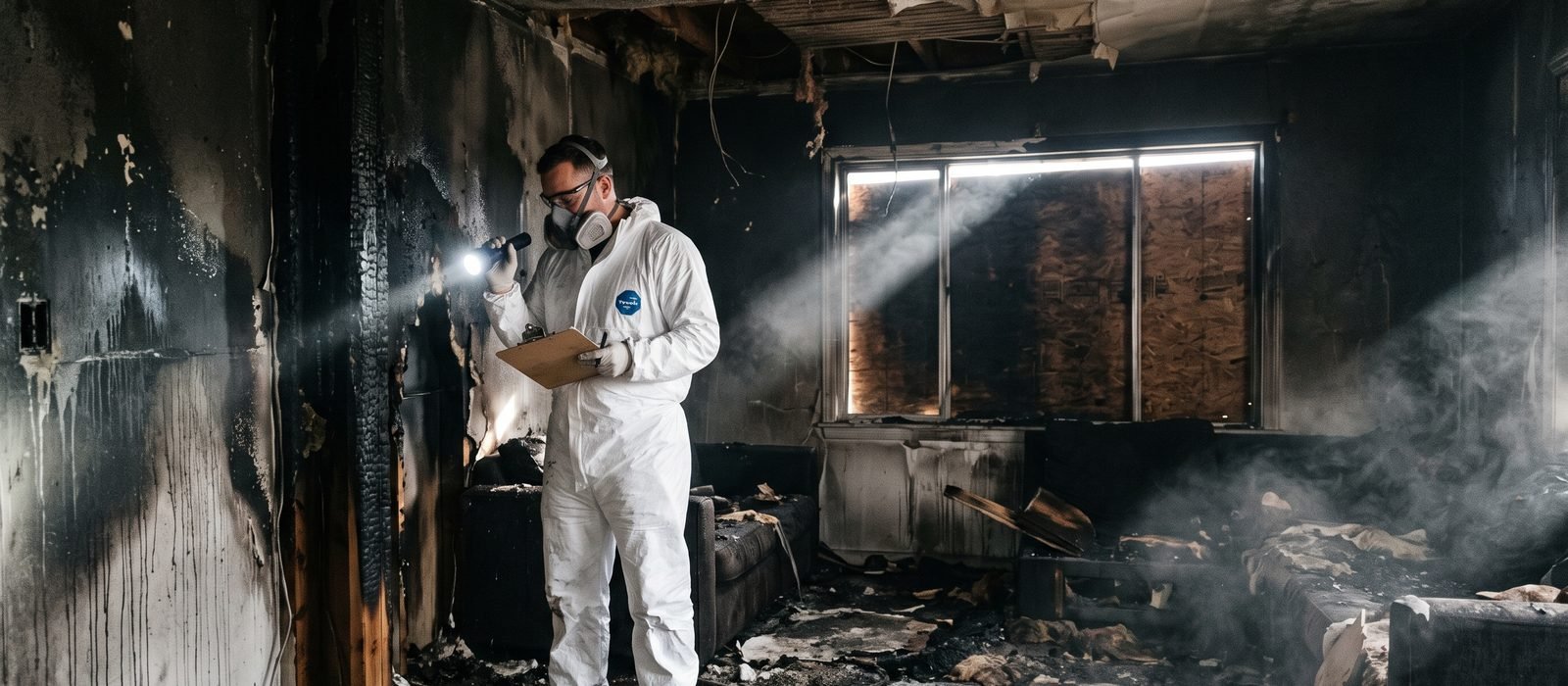
Residue type, heat patterns and salvageability mapped room by room before any cleaning starts.
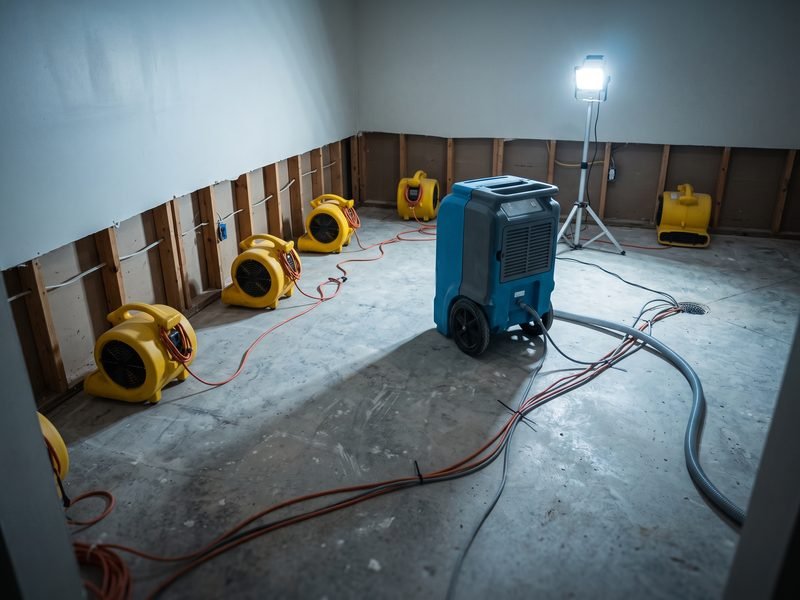
Firefighting water is its own loss, extracted and dried so a fire doesn't become a mould claim.
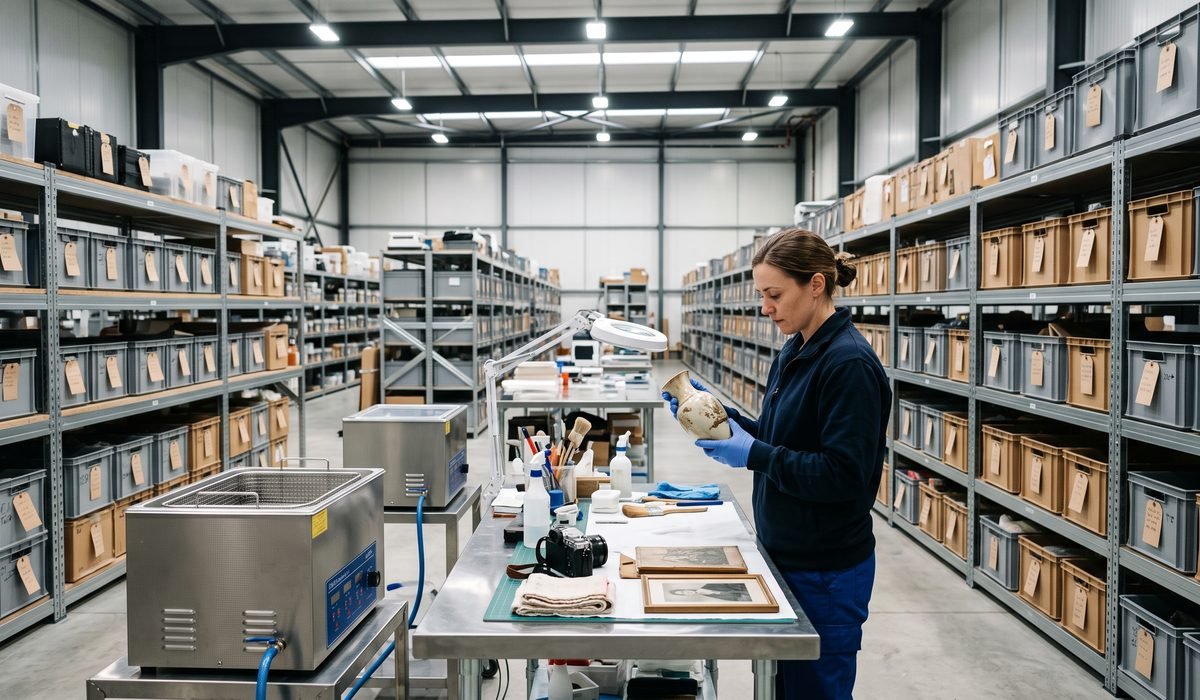
Salvageable belongings cleaned off-site in a dedicated facility while the property is rebuilt.
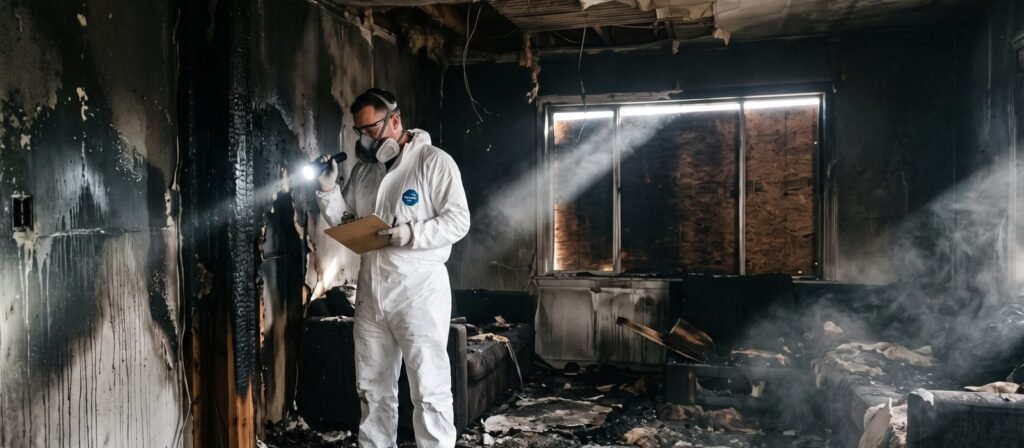
Illustrative images of our equipment and methods. Project photography will be added as jobs complete.
Not until it's been cleared. Beyond structural risk, fire residue contains carcinogens and irritants, and the air can carry particulate long after the smoke clears. Wait for the fire service to release the building, and don't start cleaning yourself. Improper cleaning frequently sets stains permanently and can expose you to contaminants.
Yes, when it's done at source. Odour lingers because residue is still present somewhere: inside walls, in ductwork, in the subfloor. We remove and seal the source, then use thermal fogging or hydroxyl treatment on what remains. Air fresheners and ozone alone, without source removal, only postpone the smell.
We do, as far as the property is concerned. We prepare the scope, document everything photographically, and negotiate the estimate with your adjuster. You stay in control of decisions; you just don't have to argue line items.
Every hour water sits, the repair gets bigger and the claim gets harder. Call now and a restoration manager will be on the line in seconds.
Answered live, 24 hours a day, 365 days a year
Burst pipes, appliance failures, roof leaks and sewer backups extracted, dried and monitored.
Testing, containment, HEPA remediation and clearance verification to industry protocol.
Emergency tarping, debris removal, structural stabilization and exterior rebuild.
Local crews respond 24/7 in Hamilton · Niagara Region · Halton Region · Peel Region · Toronto · Kitchener-Waterloo · London.