- Answered live 24/7 · IICRC Certified Firm
Finding mould is easy. Removing it without spreading spores through the rest of the building, and fixing why it grew, is the actual job.
60min
Target Response
24/7
Live Dispatch

IICRC Certified Crews
Most Major
Insurers Accepted
Mould is a symptom. Something is wet: a slow supply-line leak, a failed window seal, condensation on a cold wall, a bathroom fan venting into the attic instead of outside. Kill the growth without correcting the moisture and you’ll be looking at the same wall in six months.
The second thing that goes wrong is spread. Disturbing mould without containment aerosolises millions of spores that settle through the rest of the building, turning a bathroom problem into a whole-house problem. Proper remediation means negative-air containment, HEPA filtration, controlled removal, and an independent clearance test at the end that proves the air is back to normal.
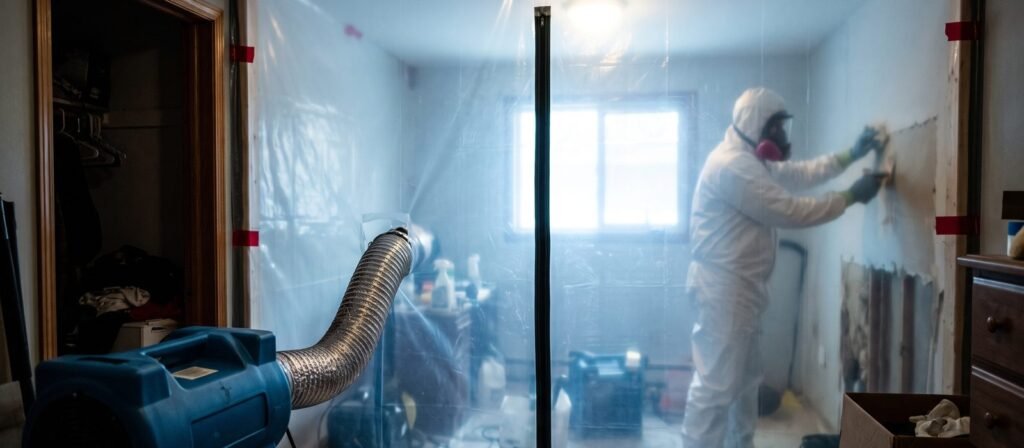
Not sure whether it’s serious? Call and describe it. We’d rather talk you out of a job than have you wait a week.
We find why it's growing first: thermal imaging and moisture meters, not just a visual check.
Spore counts and surface samples establish the baseline, and prove the result at the end.
Sealed containment under negative pressure so spores can't migrate to unaffected areas.
Air scrubbers run throughout, capturing airborne spores down to 0.3 microns.
Affected porous materials removed and bagged inside containment; salvageable surfaces HEPA-vacuumed and treated.
Health Canada-registered products applied to remaining surfaces per label to prevent regrowth.
The leak, the condensation, the ventilation fault: corrected, or you'll be calling us again.
Post-remediation testing confirms the space is clear before we rebuild and hand it back.
Locate growth and the moisture driving it. Baseline air and surface samples taken.
Sealed containment, negative air, HEPA scrubbers, before anything is disturbed.
Affected materials removed and bagged inside containment. Salvageable surfaces cleaned and treated.
Moisture source fixed, area dried, then independent clearance testing.
Drywall, paint and finishes rebuilt once the space passes clearance.
The equipment, containment and methods we bring to every loss.
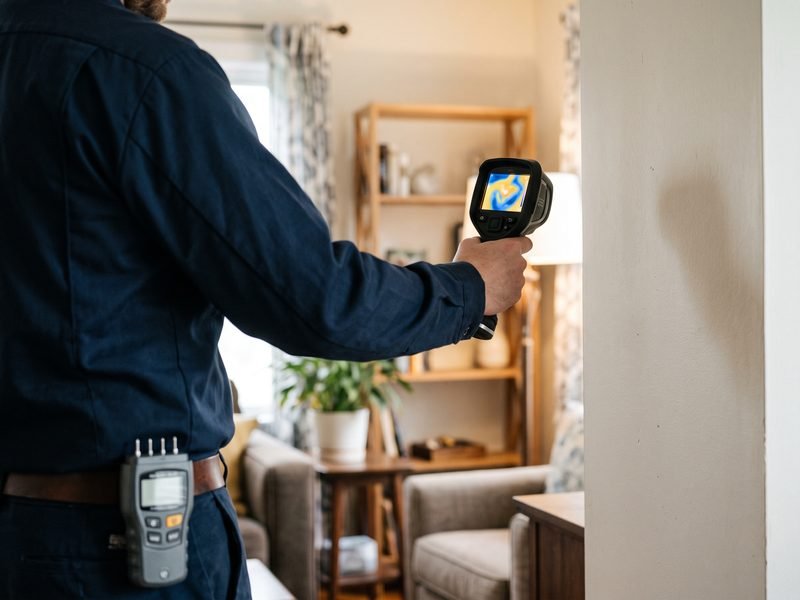
Thermal imaging and moisture meters locate the source before anything is opened up.
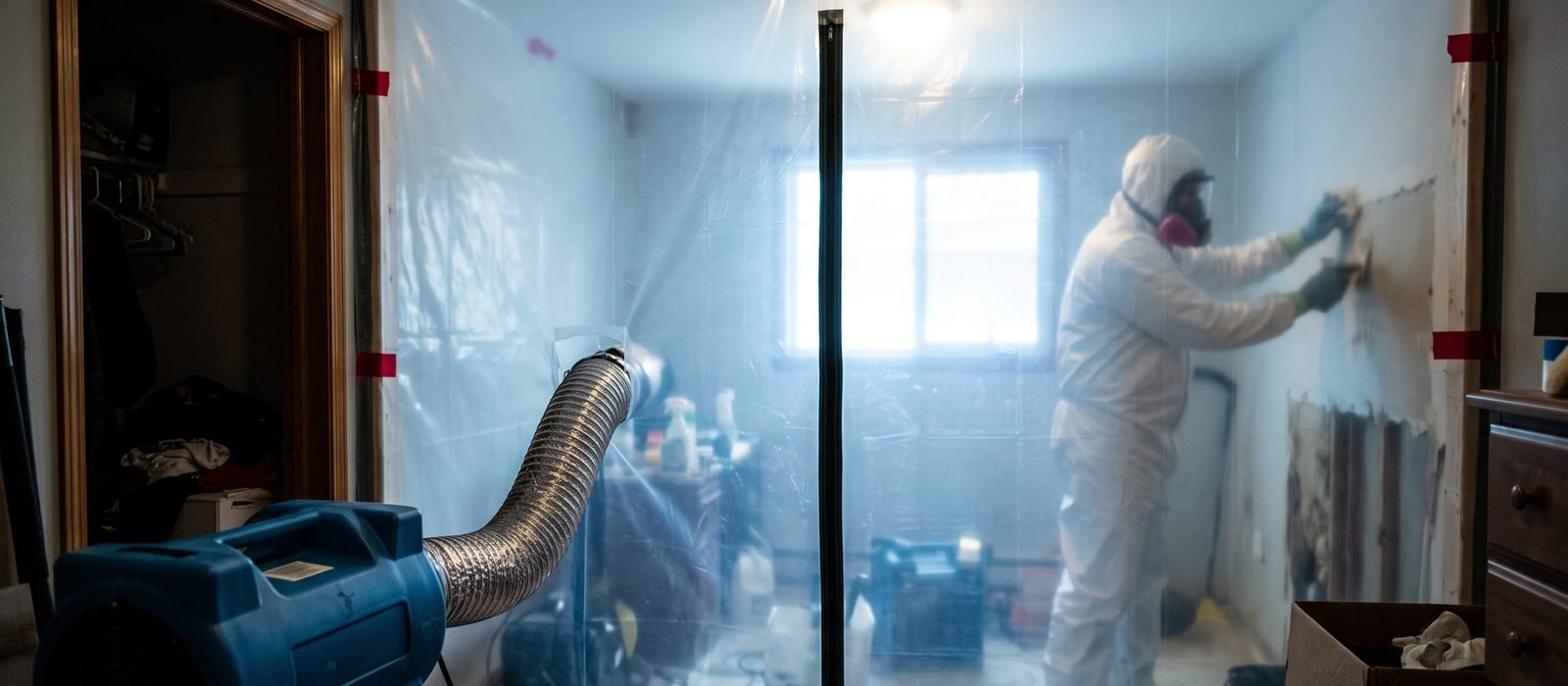
Sealed containment under negative pressure with HEPA filtration, so spores can't migrate.
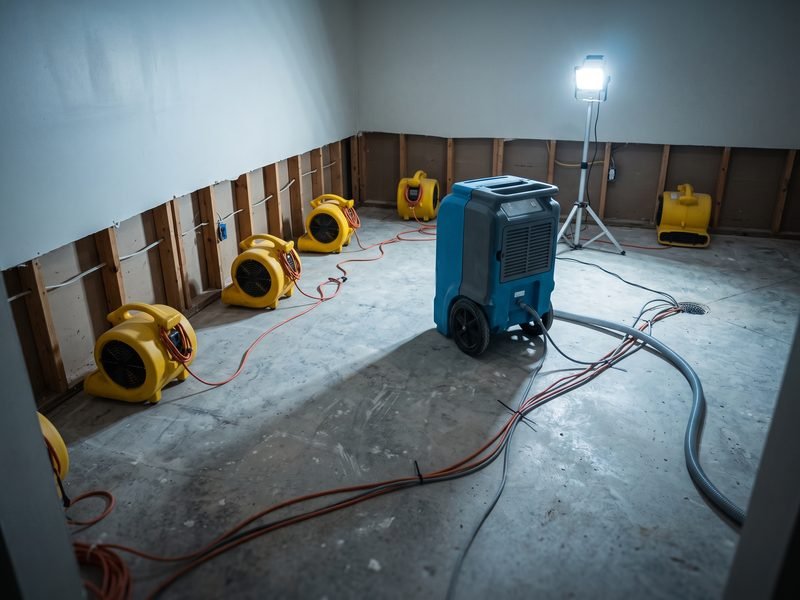
The moisture that caused the growth is corrected and dried, or the mould comes back.
Illustrative images of our equipment and methods. Project photography will be added as jobs complete.
It depends on the species, the size of the growth and who lives there. Small surface growth on tile or glass is often a cleaning job. Growth inside wall cavities, or any growth in a home with asthma, allergies, infants, elderly or immunocompromised occupants, warrants proper remediation. We'll tell you which situation you have rather than defaulting to the alarming answer.
Not always. If you can see it and you know where the water came from, testing mainly confirms what you already know. Testing is worth it when you smell mould but can't find it, when you need documentation for a real estate transaction or a dispute, or when you want clearance verification proving the remediation worked.
It scales with the affected area and how much containment is required. A single bathroom wall is a small job. Growth across a finished basement, inside a wall cavity or through an HVAC system is substantially more. The inspection and written scope are free, so you'll have a real number before committing.
Coverage varies more here than anywhere else in property insurance. Many policies cover mould only when it results from a covered sudden event, a burst pipe you reported promptly, and many cap the payout. Mould from long-term humidity, seepage or deferred maintenance is usually excluded. We'll document the cause properly, which is what determines the outcome.
Every hour water sits, the repair gets bigger and the claim gets harder. Call now and a restoration manager will be on the line in seconds.
Answered live, 24 hours a day, 365 days a year
Burst pipes, appliance failures, roof leaks and sewer backups extracted, dried and monitored.
Board-up, soot removal, odour neutralization and full reconstruction after a fire.
Emergency tarping, debris removal, structural stabilization and exterior rebuild.
Local crews respond 24/7 in Hamilton · Niagara Region · Halton Region · Peel Region · Toronto · Kitchener-Waterloo · London.